Friday, August 28, 2020

099 - Dr Richard Chasen Be More Than Just A Pod


WARNING: This episode will motivate and inspire you. Dr Richard Chasen is the owner of The Lower Limb Clinic in Melbourne, Victoria and I'm not sure if his wisdom and guidance come from his teachings as a Rabi or his 40 plus years in Karate. Richard is officially the first Black Belt Rabi on the podcast. 

On this episode, we discuss why podiatry is the best profession to be in, the business of podiatry and what it may look like in the future. 

Show Notes - TBC

Podiatry Business Coaching

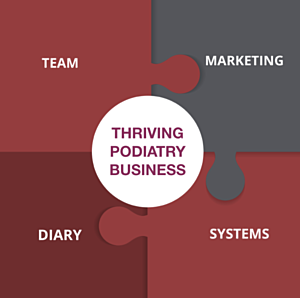
If you want to own and operate a Thriving Podiatry Business, there are four vital pieces to the business puzzle.  

  • Marketing - You need a well thought out marketing strategy, not just more tactics. 
  • Systems - You need systems that will support your marketing strategy and your team.
  • Team - You need to develop a team culture that makes your work-life balance easier, not harder. 
  • Diary - Your diary needs to be structured in a way that maximises patient numbers and increases daily profits. 

You have two choices: There's the slow approach, where you learn by trial and error and do everything yourself, or you can fast-track your education and business success with one-on-one Business Coaching or join my next 12-Week Podiatry Business Reboot group coaching program. 

If you want to know more, please email me at tf@tysonfranklin.com, and we can set up a Zoom Call and have a quick chat to see if I can be of assistance. 


Check out this episode!

Friday, August 21, 2020

098 - Michael Stephenson Tomorrow's Podiatry


Michael Stephenson is a private practitioner based in Glasgow, Scotland. Before studying Podiatry, Michael was a qualified Ski Instructor and then worked in outdoor retail where he gained an interest in helping people find solutions for painful feet which led to him studying Podiatry.

He is also the brains behind the Facebook Page Tomorrow's Podiatry and Tomorrow's Podiatry Awards. Michael is currently the Chair of the Glasgow Branch of The College of Podiatry and Deputy Professional Editor of the societies magazine, Podiatry Now.

On this episode we discuss:

  • His transition from the world of skiing into podiatry
  • How his retail experience taught him how to listen to the client's needs 
  • Why you need to change the way you deliver content
  • Tomorrow's Podiatry Awards
  • The advantages of working with students
  • Creating communities of learning and developing a new culture in podiatry. 

What does digitisation mean?

It's not creating a PDF copy and putting it online. It's about taking content and understanding what your reader is doing.

Readers will interact differently on their mobile compared to their desktop. No one will read 2000 words on their phone.

You may have an hour-long conversation recorded on video and audio, but there are only a few minutes that are important to someone, so you've got to deliver it in a way that works for them. 

"The people that will shape the profession are the people coming into the profession now, not the people that have been here already for 25 years". 

Final Tip

If you're bored in podiatry go and learn something new, it will keep the passion going. 

If you have any questions about this episode, please send me an email at tf@tysonfranklin.com, or you can connect with Michael on Facebook at Tomorrow's Podiatry. 

Podiatry Business Coaching

If you want to own and operate a Thriving Podiatry Business, there are four vital pieces to the business puzzle.  

  • Marketing - You need a well thought out marketing strategy, not just more tactics. 
  • Systems - You need systems that will support your marketing strategy and your team.
  • Team - You need to develop a team culture that makes your work-life balance easier, not harder. 
  • Diary - Your diary needs to be structured in a way that maximises patient numbers and increases daily profits. 

You have two choices: There's the slow approach, where you learn by trial and error and do everything yourself, or you can fast-track your education and business success with one-on-one Business Coaching or join my next 12-Week Podiatry Business Reboot group coaching program. 

If you want to know more, please email me at tf@tysonfranklin.com, and we can set up a Zoom Call and have a quick chat to see if I can be of assistance. 


Check out this episode!

Thursday, August 13, 2020

097 - Dr TJ Ahn Avoid The Force of Average


Dr TJ Ahn is a first-generation Korean who immigrated to America alone when he was only 19 without any connections or ability to speak English. He called Tennessee home initially where he studied Computer Science and Business, before eventually moving to Chicago to study podiatry, which is where he still lives and practices podiatry.

In addition to running his podiatry business, he is using his experience and business knowledge to help other colleagues build their dream private practices at TJ Ahn Coaching & Consulting

On this episode we discuss:

  • His love of Aikido and how this was an essential step towards his podiatry career
  • The importance of connection
  • Teachers and Mentors help knock off the bad edges.
  • What we do and who we are are not the same thing. 
  • Being an Experimentalist
  • The power of Adaptability
  • Why he was going to quit podiatry between 2012 - 2014
  • How his mindset changed between 2014 - 2016. "You're worth far more than an insurance company says you are". 
  • Increasing your podiatry service to a concierge level
  • Reactivating your existing patients is more important than trying to get new patients 
  • Strategy & Tactics 
  • The Force of Average 
  • Social bullying
  • Find a niche, get good at it and defend it

"Most podiatrists are too focused on revenue instead of focusing on profit. Would you prefer 20% of one million dollars or 45% of half a million dollars."

4-Step Plan to Follow

  1. Tweak your mindset
  2. Find your niche
  3. Have a solid marketing strategy and tactics in place
  4. Adjust your practice systems

If you follow these four steps, you'll have crazy business profits and victory. 

"When you wake up tomorrow are you going to be a better version of yourself, the same version, or a worse version? You decide."

Take Action

When you focus on an attainable goal and on the implementation required, meaning you take action to make sure the small tasks get done, you're heading in the right direction. 

Creating a habit of getting small tasks done every day, towards the big goal, will make you feel good and alive.

FREE BOOK OFFER

Dr TJ Ahn has written a book called Opt-Out, and you can obtain a free by following this link optoutbook.com, all you need to do is pay for the postage...BARGAIN!!!

Dr Ahn also has a private Facebook Group called Podiatry Profits, and a podcast called the Podiatry Profits Podcast

If you have any questions about this episode, please send me an email at tf@tysonfranklin.com.

Podiatry Business Coaching & Mentoring

If you want to own and operate a Thriving Podiatry Business, there are four vital pieces to the business puzzle.  

  • Marketing - You need a well thought out marketing strategy, not just more tactics. 
  • Systems - You need systems that will support your marketing strategy and your team.
  • Team - You need to develop a team culture that makes your work-life balance easier, not harder. 
  • Diary - Your diary needs to be structured in a way that maximises patient numbers and increases daily profits. 

You have two choices: There's the slow approach, where you learn by trial and error and do everything yourself, or you can fast-track your education and business success with one-on-one business coaching and mentoring, or group coaching

If you want to know more, please email me at tf@tysonfranklin.com, and we can set up a Zoom Call and have a quick chat to see if I can be of assistance. 


Check out this episode!

Thursday, August 6, 2020

096 - Jonathan Small FEAR & Comfort Zones


Jonathan Small is a UK based podiatrist, and today we discuss why many podiatrists fear stepping out of their comfort zones, not realising that this avoidance is forgoing their long-term career and business success.    

It's not normal to say, "I want to make myself uncomfortable", but when you're making decisions about your podiatry business that you think is making you happy now, will this decision still make you happy in years to come? 

Setting Your Fees

Moving out of your comfort zone is not just about acquiring new skills or trying new things. Are you setting your fees within your comfort zone? And are you aware that the fees you set NOW may affect what you can and cannot do in the future?

If you're telling yourself that you're happy with the fees that you've set, you've already settled back into your comfort zone. Your fees should always make you slightly uncomfortable. 

Desensitisation

You will overcome your fear by doing what makes you uncomfortable repeatedly. The more often you do it, the more comfortable you'll become, and eventually, you'll be desensitised. 

It's all about repeating the process. 

Avoiding Danger

Most people stay in their comfort zone because they want to avoid danger, it's in our DNA to keep safe, but most of the things we're trying to avoid will not kill us and are completely safe. 

"If you're not sure about doing something, find someone that has already done it and learn from them or be inspired". 

Green & Growing 

You have a choice to be green and growing or ripe and rotting, and growth only comes by getting out of your comfort zone. 

Growth is where the good stuff is. 

Marketing & Sales

Saying you're not into marketing and sales is an excuse. Be honest with yourself and admit it makes you uncomfortable. So, it's not that you're not into marketing and sales, it's just that you have not yet acquired the skills. 

"You need to understand that you're not going to get it right straight away. There's a whole journey to get to your destination".

10 Habits of Happy People

  1. More family and friends time
  2. Don't respond to negativity
  3. Do work that brings joy
  4. Read and write more
  5. Give without expecting to get
  6. Stay teachable
  7. Forgive first
  8. Show gratitude
  9. Speak the truth
  10. No sense of entitlement

Final Tip

If you step out of your comfort zone in your personal life, it will reflect in your business life. Take up a new hobby, start something new that is going to give me some pain. It will have a knock-on effect. 

Jonathan's previous episodes:

Ep 006: Work Smart, Not Harder

Ep 044: Podiatry Success Is A Mindset

Ep 081: Don't Live In The Land of Low Fees

If you have any questions about this episode, please send me an email at tf@tysonfranklin.com, or you can connect with Jonathan at Health First Foot & Gait Clinic.

Podiatry Business Coaching & Mentoring

If you want to own and operate a Thriving Podiatry Business, there are four vital pieces to the business puzzle.  

  • Marketing - You need a well thought out marketing strategy, not just more tactics. 
  • Systems - You need systems that will support your marketing strategy and your team.
  • Team - You need to develop a team culture that makes your work-life balance easier, not harder. 
  • Diary - Your diary needs to be structured in a way that maximises patient numbers and increases daily profits. 

You have two choices: There's the slow approach, where you learn by trial and error and do everything yourself, or you can fast-track your education and business success with one-on-one business coaching and mentoring, or group coaching

If you want to know more, please email me at tf@tysonfranklin.com, and we can set up a Zoom Call and have a quick chat to see if I can be of assistance.  


Check out this episode!

Friday, July 31, 2020

095 - Nicky Jurd Is Your Website Like Off Milk?


Nicky Jurd is the co-owner of Precedence, a website development company based in Cairns, Australia, and her company employees over 20 socially awkward, yet incredibly talented website designers and programmers. 

But Nicky openly admits that the coffee machine is still the hardest working and most loved employee. 

On this episode, we talk specifically about podiatry websites and discuss:

  • Why many websites are unloved and therefore, underwhelming.
  • Why a website needs a minor upgrade every 2-years and major upgrade every 5-years
  • How to tell if your website is like off milk
  • How an old website looks old, and this reflects on the business
  • The changing trends in website design

The 3-Elements to a great website

    1. A Good Brand: Your brand is the starting point of making an excellent website. There needs to be consistency among the brand. Has your logo changed and your colours outdated? Does it need to be refreshed before you start your website?
    2. Good Web Photos: Modern websites have outstanding web photos, and they are usually taken by a professional. Many podiatrists use stock images, and they never look right. Photos speak to trust.
    3. Good Copy: The best websites always have good copy, usually written by a professional or by someone who writes a lot. Copy needs to answer the fundamental questions the patient wants to know before coming to visit you, and it can be vastly different depending on their condition, demographics, etc.

If you look at the three elements to have a great website, they are all marketing, which is why you need to work with a website company that understands marketing, not just the technology. The tech that makes it all work is the least important. 

Final Tip

Everyone should Google their name and be aware of their online reputation. 

If you have any questions after listening to this podcast, please email me at tf@tysonfranklin.com or contact Nicky Jurd by just Googleing her name. 

Podiatry Business Coaching & Mentoring

If you want to own and operate a Thriving Podiatry Business, there are four vital pieces to the business puzzle.  

  • Marketing - You need a well thought out marketing strategy, not just more tactics. 
  • Systems - You need systems that will support your marketing strategy and your team.
  • Team - You need to develop a team culture that makes your work-life balance easier, not harder. 
  • Diary - Your diary needs to be structured in a way that maximises patient numbers and increases daily profits. 

You have two choices: There's the slow approach, where you learn by trial and error and do everything yourself, or you can fast-track your education and business success with one-on-one business coaching and mentoring, or group coaching

If you want to know more, please email me at tf@tysonfranklin.com, and we can set up a Zoom Call and have a quick chat to see if I can be of assistance.  


Check out this episode!

Thursday, July 30, 2020

094 - Alex Murray Making Sense of Pain Management


Alex Murray is a Canberra based Podiatrist working in private practice and the founder of the website Making Sense in Podiatry. He's passionate about helping other clinicians make sense of evidence and clinical practice with a core philosophy of exploring the complexity of human beings, embracing the uncertainty of clinical practice, and avoiding overly reductionist thinking.

He has experience with both national and international athletes and recently transitioned to focusing primarily on helping the general population, and local athletes manage their pain and achieve their goals.

On this episode we discuss:

  • The paradigm shift and changing the ways we think about not only our failures but also our successes.
  • Reductionism & Complexity
  • Guided problem solving: why different problems can be managed successfully in many ways
  • Having more treatment options make us better.
  • Pain Management and managing athletes.
  • Patient beliefs and previous experiences will determine their behaviours. 
  • The long-term benefits of understanding and listening to your patient's goals and how to encourage them back into their activity 

"Reassurance is a great pain killer."

Final Tip

Listen: You need to listen before you begin to educate your patient. If you listen, you'll know everything that you need to address. You'll know what the patient's goal is, and you can take that information and apply it to them.

With listening, we'll know what they're looking for, expecting, and what makes them fearful. Only then can we can reassure our patients. 

Reflective Listening: Reflect what they're saying, so they can either correct us or agree with us. There needs to be a sense of collaboration. 
If you have any questions after listening to this episode, please send me an email at tf@tysonfranklin.com, or you can contact Alex Murray via his website Making Sense in Podiatry, or his Facebook Page

You'll find a list of  Alex's Reference Articles at the bottom of this page. 

Podiatry Business Coaching & Mentoring

If you want to own and operate a Thriving Podiatry Business, there are four vital pieces to the business puzzle.  

  • Marketing - You need a well thought out marketing strategy, not just more tactics. 
  • Systems - You need systems that will support your marketing strategy and your team.
  • Team - You need to develop a team culture that makes your work-life balance easier, not harder. 
  • Diary - Your diary needs to be structured in a way that maximises patient numbers and increases daily profits. 

You have two choices: There's the slow approach, where you learn by trial and error and do everything yourself, or you can fast-track your education and business success with one-on-one business coaching and mentoring, or group coaching

If you want to know more, please email me at tf@tysonfranklin.com, and we can set up a Zoom Call and have a quick chat to see if I can be of assistance.  

ALEX'S REFERENCES

THE ESSENTIAL PAIN PAPER

Moseley, G. L. (2007). Reconceptualising pain according to modern pain science. Physical Therapy Reviews, 12(3), 169-178. doi: 10.1179/108331907X223010


Pain papers:

Atlas, L. Y., & Wager, T. D. (2012). How expectations shape pain. Neuroscience Letters, 520(2), 140-148. doi: https://doi.org/10.1016/j.neulet.2012.03.039


Hainline, B., Turner, J. A., Caneiro, J. P., Stewart, M., & Lorimer Moseley, G. (2017). Pain in elite athletes—neurophysiological, biomechanical and psychosocial considerations: a narrative review. Br J Sports Med, 51(17), 1259-1264. doi: 10.1136/bjsports-2017-097890


Harvie, D. S., Broecker, M., Smith, R. T., Meulders, A., Madden, V. J., & Moseley, G. L. (2015). Bogus visual feedback alters onset of movement-evoked pain in people with neck pain. Psychol Sci, 26(4), 385-392. doi: 10.1177/0956797614563339


Rio, E., Moseley, L., Purdam, C., Samiric, T., Kidgell, D., Pearce, A. J., . . . Cook, J. (2014). The pain of tendinopathy: physiological or pathophysiological? Sports Med, 44(1), 9-23. doi: 10.1007/s40279-013-0096-z


Testa, M., & Rossettini, G. (2016). Enhance placebo, avoid nocebo: How contextual factors affect physiotherapy outcomes. Man Ther, 24, 65-74. doi: 10.1016/j.math.2016.04.006


Understanding complexity/complex systems theory:

Bittencourt, N. F. N., Meeuwisse, W. H., Mendonça, L. D., Nettel-Aguirre, A., Ocarino, J. M., & Fonseca, S. T. (2016). Complex systems approach for sports injuries: moving from risk factor identification to injury pattern recognition—narrative review and new concept. Br J Sports Med, 50(21), 1309-1314. doi: 10.1136/bjsports-2015-095850


Stern, B. D., Hegedus, E. J., & Lai, Y. C. (2020). Injury prediction as a non-linear system. Phys Ther Sport, 41, 43-48. doi: 10.1016/j.ptsp.2019.10.010


Biopsychosocial model of health

Engel, G. L. (1977). The need for a new medical model: a challenge for biomedicine. Science, 196(4286), 129-136. doi: 10.1126/science.847460

Engel, G. L. (1980). The clinical application of the biopsychosocial model. Am J Psychiatry, 137(5), 535-544. doi: 10.1176/ajp.137.5.535


Muscloskeletal Pain/Injury:

Caneiro, J. P., Roos, E. M., Barton, C. J., O'Sullivan, K., Kent, P., Lin, I., . . . O'Sullivan, P. (2020). It is time to move beyond ‘body region silos’ to manage musculoskeletal pain: five actions to change clinical practice. Br J Sports Med, 54(8), 438-439. doi: 10.1136/bjsports-2018-100488


Lewis, J., & O’Sullivan, P. (2018). Is it time to reframe how we care for people with non-traumatic musculoskeletal pain? Br J Sports Med, 52(24), 1543-1544. doi: 10.1136/bjsports-2018-099198

Lin, I., Wiles, L., Waller, R., Goucke, R., Nagree, Y., Gibberd, M., . . . O’Sullivan, P. P. B. (2020). What does best practice care for musculoskeletal pain look like? Eleven consistent recommendations from high-quality clinical practice guidelines: systematic review. Br J Sports Med, 54(2), 79-86. doi: 10.1136/bjsports-2018-099878


Shared Decision Making:

Hoffmann, T. C., Lewis, J., & Maher, C. G. (2020). Shared decision making should be an integral part of physiotherapy practice. Physiotherapy, 107, 43-49. doi: https://doi.org/10.1016/j.physio.2019.08.012


Clinical Decision Making:

Simpkin, A. L., & Schwartzstein, R. M. (2016). Tolerating Uncertainty - The Next Medical Revolution? N Engl J Med, 375(18), 1713-1715. doi: 10.1056/NEJMp1606402


Walton, D. M. (2019). The critical skill of asking why? An endorsement of critical reflection in physiotherapy research and practice. Musculoskelet Sci Pract, 41, iv-v. doi: 10.1016/j.msksp.2019.04.005


Zou, K., Wong, J., Abdullah, N., Chen, X., Smith, T., Doherty, M., & Zhang, W. (2016). Examination of overall treatment effect and the proportion attributable to contextual effect in osteoarthritis: meta-analysis of randomised controlled trials. Ann Rheum Dis, 75(11), 1964-1970. doi: 10.1136/annrheumdis-2015-208387


Communication:


Soklaridis, S., Hunter, J. J., & Ravitz, P. (2014). Twelve tips for asking and responding to difficult questions during a challenging clinical encounter. Med Teach, 36(9), 769-774. doi: 10.3109/0142159x.2014.916782


Zolnierek, K. B. H., & Dimatteo, M. R. (2009). Physician communication and patient adherence to treatment: a meta-analysis. Medical care, 47(8), 826-834. doi: 10.1097/MLR.0b013e31819a5acc


Check out this episode!

Saturday, July 25, 2020

093 - Kieran Carew Pathology Based Orthotics


Kieran Carew specialises in CADCAM technologies and postural biomechanics and is the Director of Foothealth UK Ltd. During the COVID-19 pandemic, he developed  Pathology Based Orthotics, which is an alternative to custom-made orthotics and perfect for podiatrists using Telehealth. 

How his story began

Kieran Carew has always had a passion for sports and fitness, and it was his sporting passion that introduced him to the podiatry profession. While playing Hurling, he developed severe shin splints, and his doctor referred him to a podiatrist. 

After his initial assessment, the podiatrist prescribed orthotics. 

Kieran openly admits he had no idea what a podiatrist was and when he was first handed his orthotics he felt violated. How could something that looked just like a shoe-innersole cost so much?  

Well, to his surprise, the orthotics cured his shin splints. Because of his engineering background, he needed to investigate further how a simple-looking device could have such a dramatic, positive effect on his lower limb biomechanics. 

On this episode we discuss: 

  • Plastic engineering
  • Cadcam and 3D printing 
  • Why orthotics are only part of the solution
  • What are Pathology based orthotics?
  • Visit your lab and observing their orthotic manufacturing process.
  • Why he started weekly webinars: To register and learn more send an email to info@foothealth.eu

"The success of an orthotic is not how you make the orthotic; the key driver comes from the knowledge of the practitioner and how they share that knowledge with the lab."

Final Tip

Update your knowledge. Not every MSK or Biomechanical problem needs orthotics; you can influence change through exercises, and not every orthotic need to be custom-made, sometimes a simple over the counter device is all that is required.   

If you have any questions after listening to this episode, please send me an email at tf@tysonfranklin.com, or you can contact Kieran at info@foothealth.eu

Podiatry Business Coaching & Mentoring

If you want to own and operate a Thriving Podiatry Business, there are four vital pieces to the business puzzle.  

  • Marketing - You need a well thought out marketing strategy, not just more tactics. 
  • Systems - You need systems that will support your marketing strategy and your team.
  • Team - You need to develop a team culture that makes your work-life balance easier, not harder. 
  • Diary - Your diary needs to be structured in a way that maximises patient numbers and increases daily profits. 

You have two choices: There's the slow approach, where you learn by trial and error and do everything yourself, or you can fast-track your education and business success with one-on-one business coaching and mentoring, or group coaching

If you want to know more, please email me at tf@tysonfranklin.com, and we can set up a Zoom Call and have a quick chat to see if I can be of assistance.  

Newsletter & Events 

Please sign up for my NEWSLETTER if you'd like to know more about upcoming EVENTS. I promise not to spam you with daily emails telling you how great I am.

My Book

It's No Secret There's Money In Podiatry. In Australia, you can order directly from my website, but if you live overseas, I would suggest Amazon or the Book Depository.

Tell Your Podiatry Friends

If you enjoy listening to Podiatry Legends, please tell all your podiatry friends, and please feel free to leave a REVIEW on iTunes, or wherever you like to listen to podcasts. 

If you enjoyed this episode you might also enjoy:

Ep 067: Dr Emily Splichal Barefoot Function & Barefoot Science

Ep 092: Sarah-Jane Walls is The Posture Pod

Facebook Page & Group

Facebook Group: Podiatry Business Owners Club - This is for podiatry business owners and budding business owners, and the place where I will be adding my video marketing tips. 

Facebook Page: Podiatry Legends Podcast - This is where I post each podcast episode and information regarding my guests. 


Check out this episode!